We don't make toys. We design companions for childhood exploration.
Made for play. Left open to imagination.
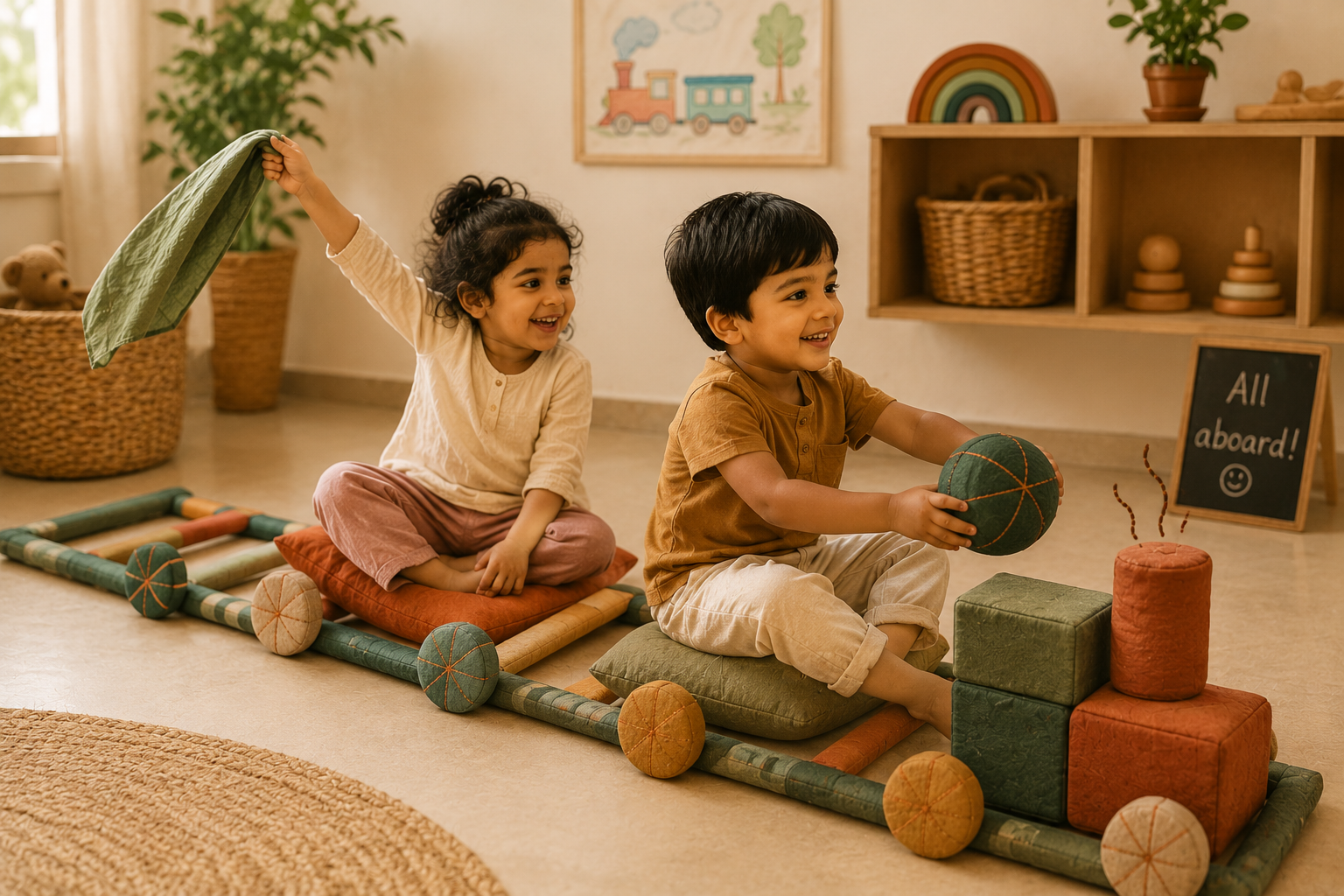
A box becomes a house. A cloth becomes a river. One object. Many possibilities. The child decides what it becomes.
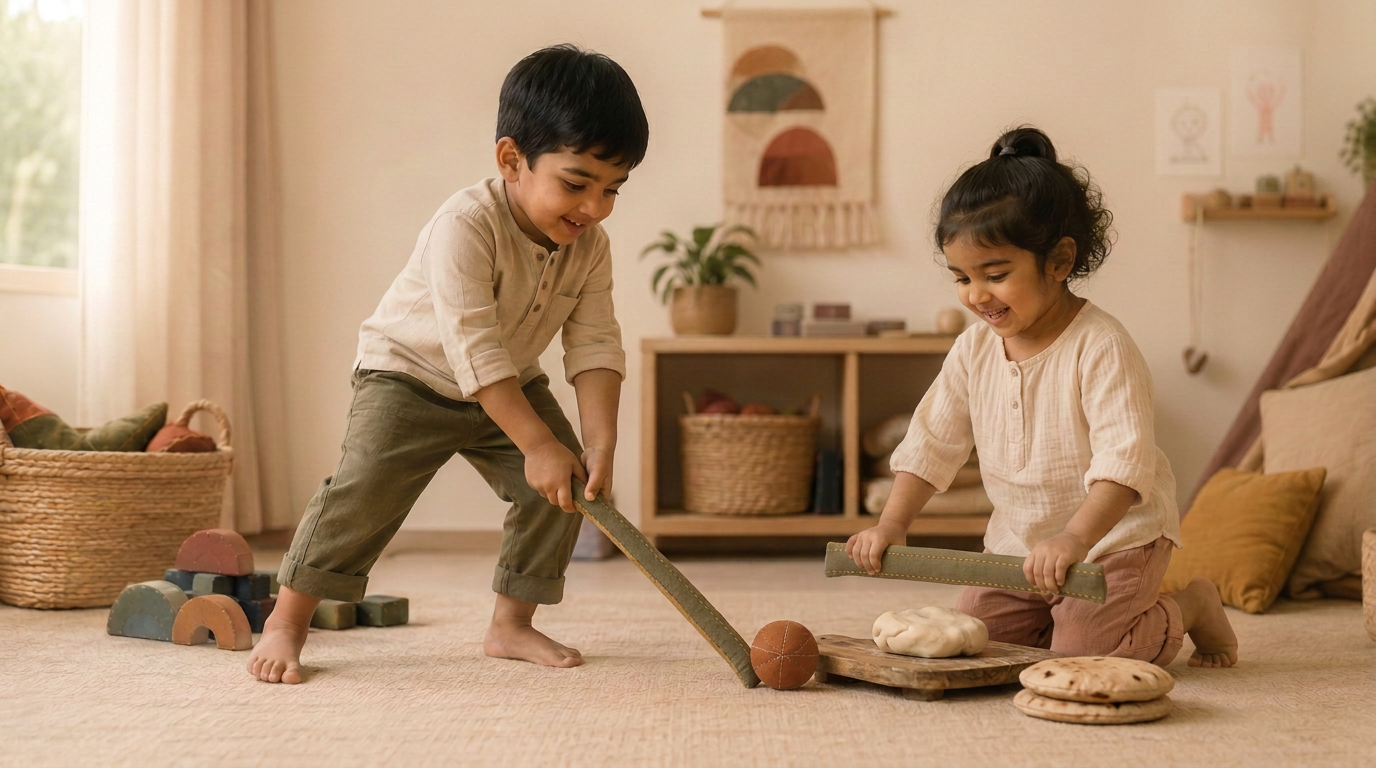
Play Stick & Ball - a hockey stick, a rolling pin or whatever your child wants it to be
The everyday reality
Childhood is getting busier. Let play stay simple.
Our children are growing up in apartments, surrounded by screens, schedules, structured activities and toys that often do the playing for them.
They have more stimulation than ever, more toys than we ever had. But do they have enough room to simply play?
And yet what they want most is simple
- A space to move.
- Something to touch and explore safely.
- Someone to play with.
- And the freedom to imagine.
Children don't need more things to consume. They need more opportunities to create.
Our philosophy
We make the object. They make the meaning.
A product should never tell a child what it is or what to do.
- No fixed story. No prescribed outcome.
- Invitation, not instruction.
- The child decides what it becomes.
Playing with our logo
Add a beak and it becomes a bird
The collection
One object. Many possibilities.
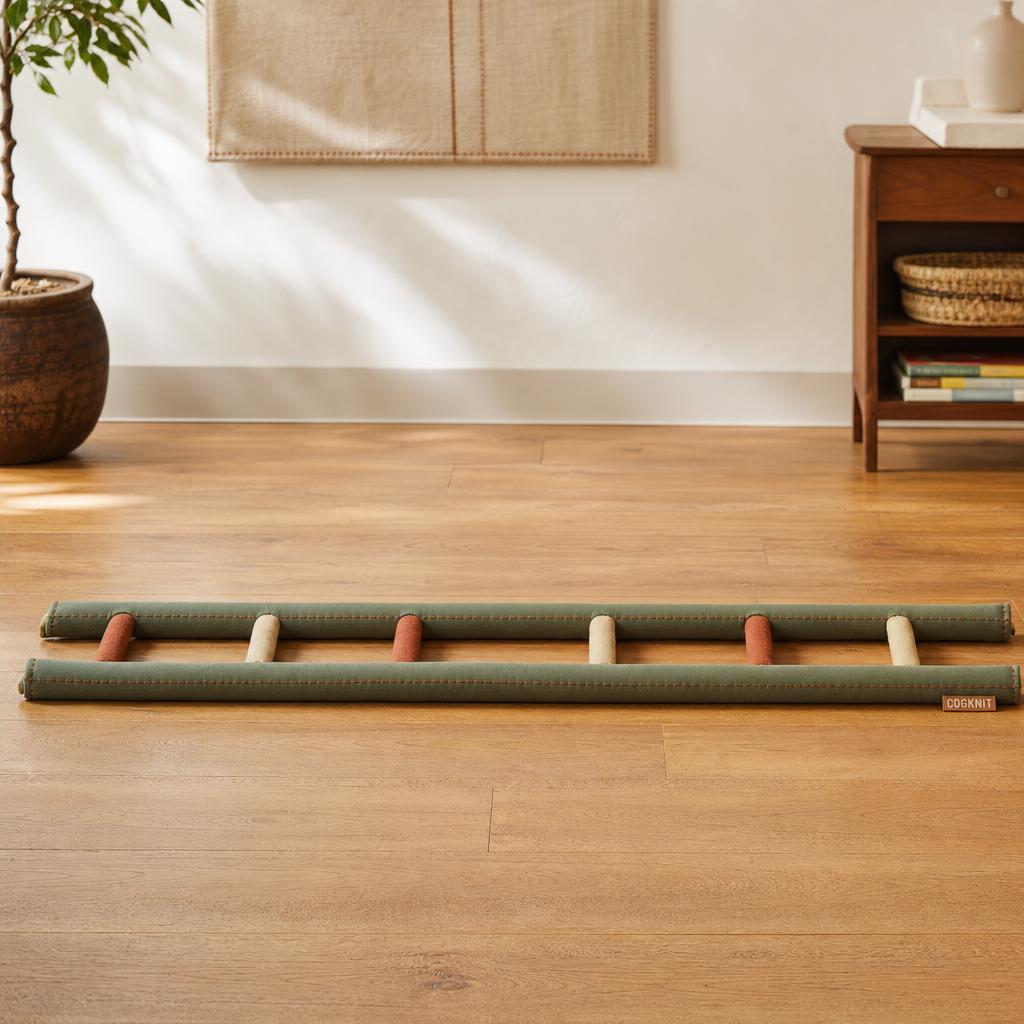
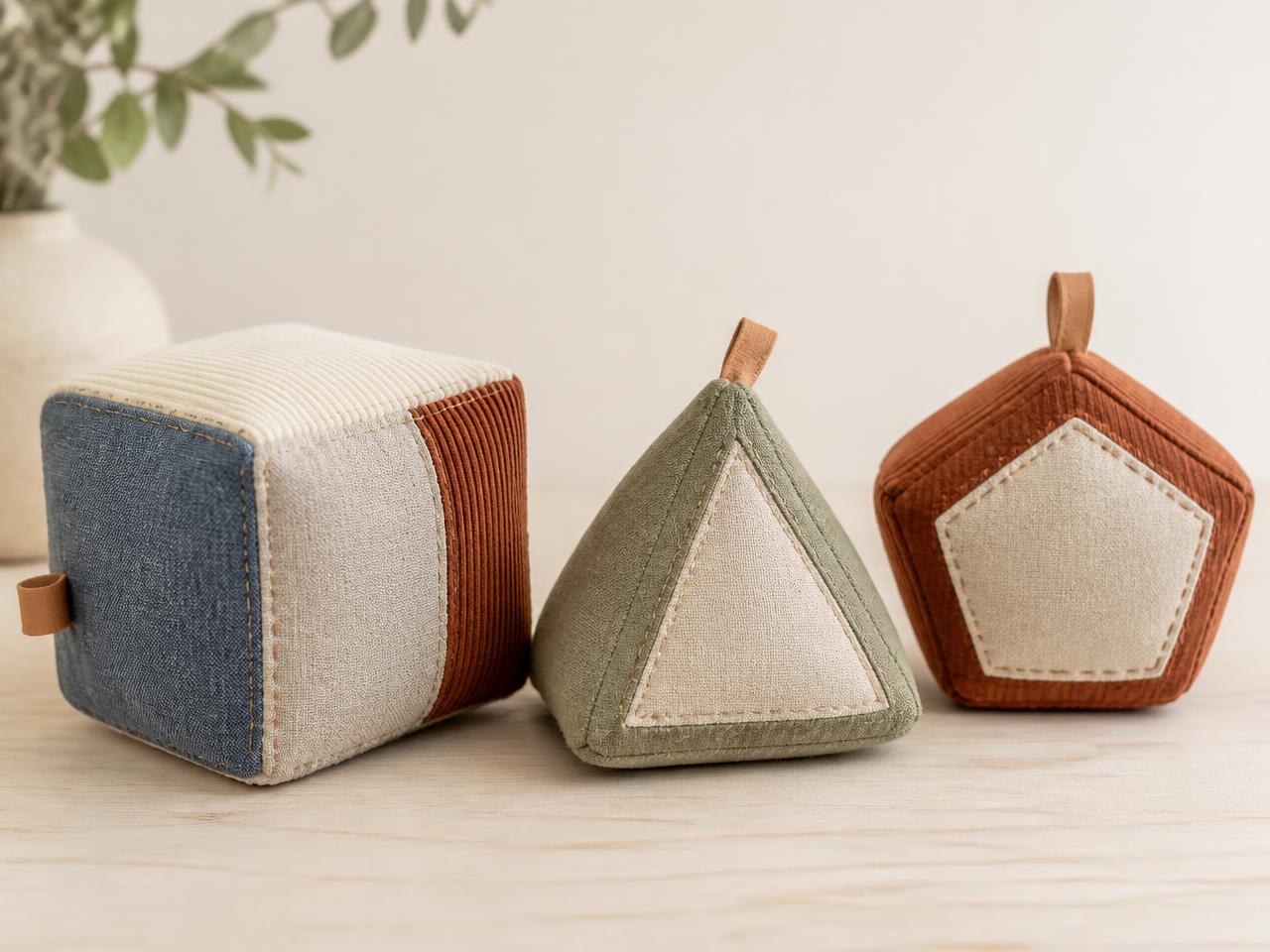
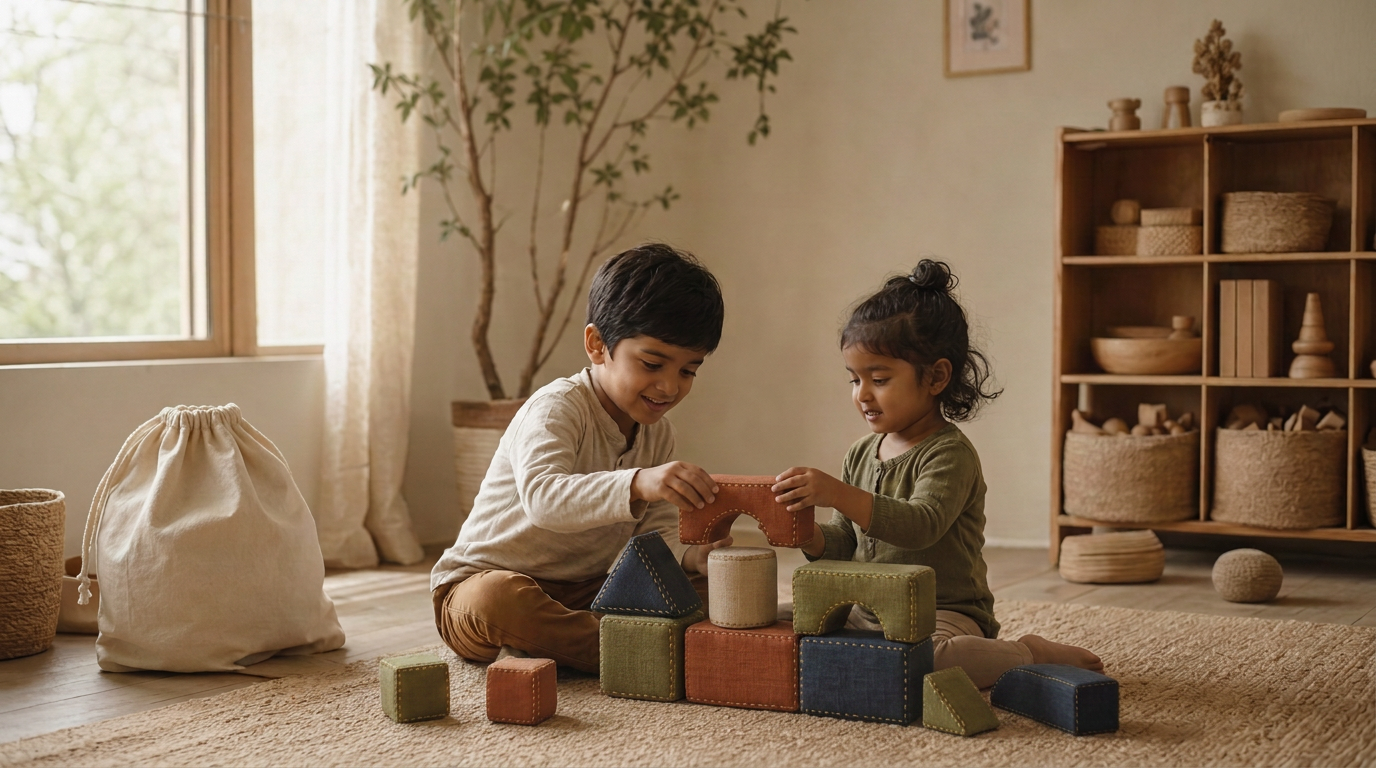
Discovery Blocks
Soft fabric blocks in different geometric forms, designed with a variety of sensory experiences.
Shop now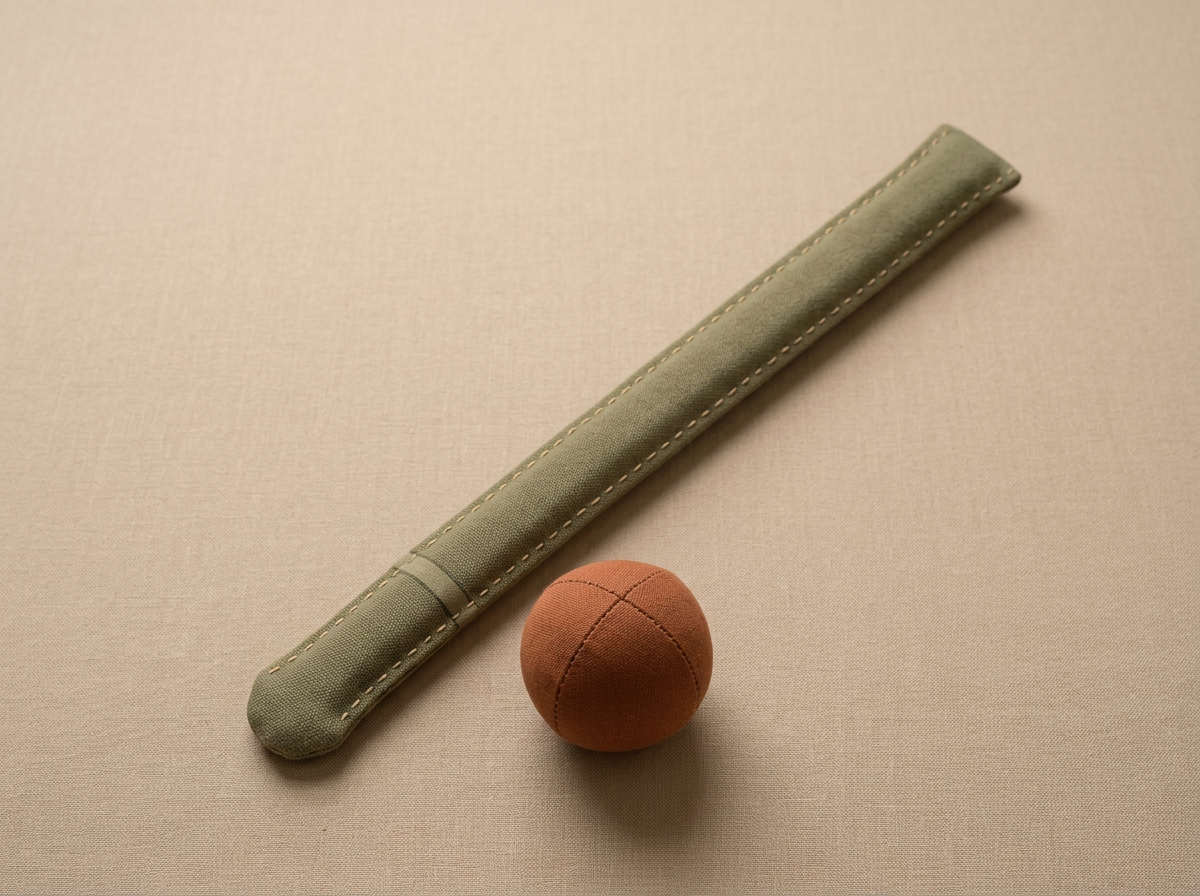
Play Stick + Ball
A fabric stick with a matching cloth ball that encourages movement and pretend play.
Shop now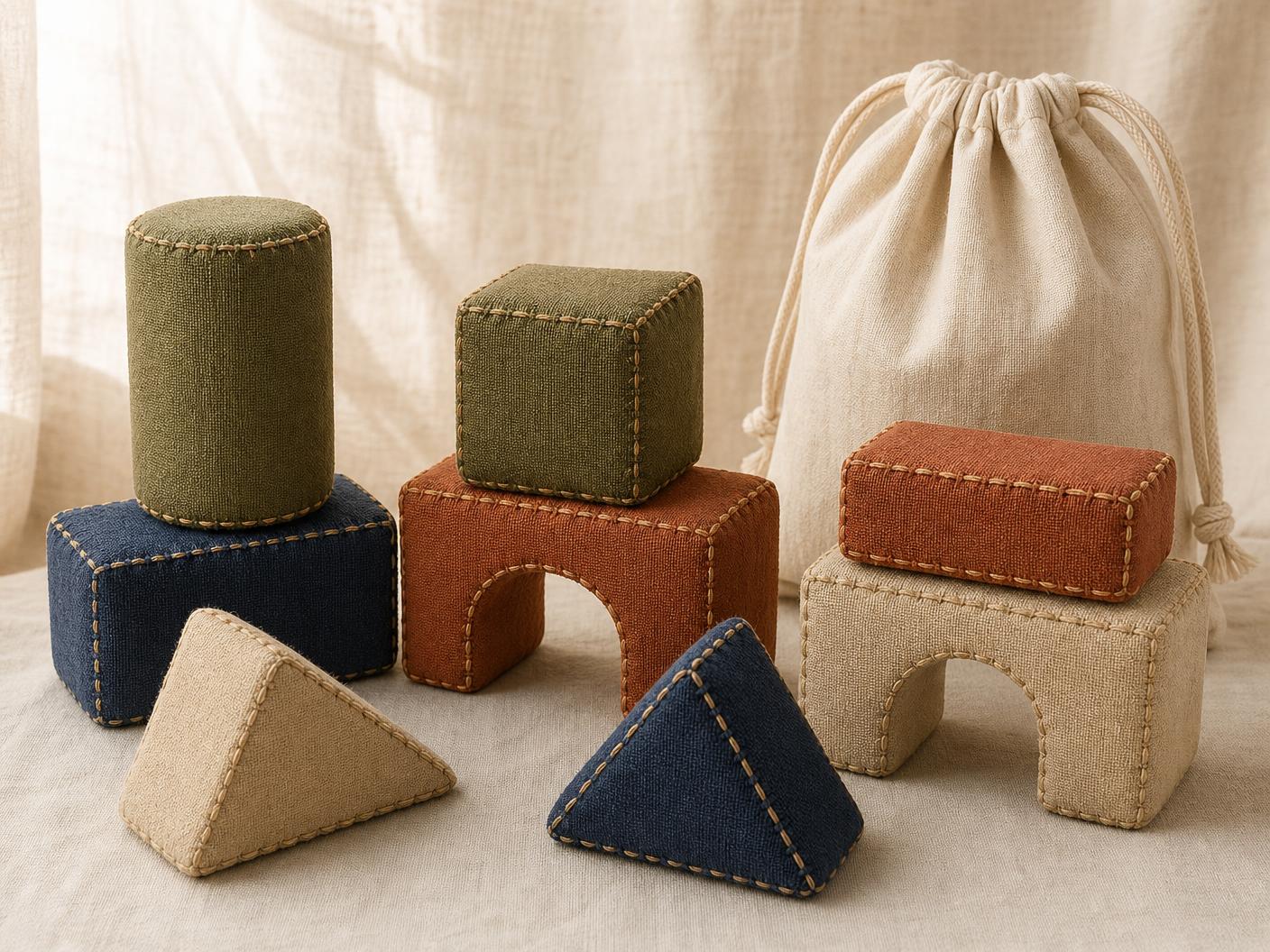
Why this kind of play matters
Because play isn't preparation for childhood. Play is how childhood happens.
The early years are when children are building much more than knowledge. They are building their bodies, confidence, language, relationships, imagination and their ability to make sense of the world.
And much of that learning doesn't look like learning at all. It looks like jumping, carrying, balancing, pretending, building, negotiating, making up stories, trying again.
That's why cogKnit is designed around sensory exploration, movement, imagination, agency and connection - rather than flashing lights, predetermined outcomes or keeping a child entertained.
FIVE WAYS CHILDREN PLAY
Discover. Move. Explore. Imagine. Create.
Five broad ways children engage with the world through play - not rigid developmental stages, but overlapping possibilities.
Ages are indicative - most children move in and out of these ways of playing.
We don't design for milestones. We design for possibilities.
The child brings their current abilities, interests and imagination - and the product meets them there.
A different way to make toys
Two ways of designing for play.
Many conventional toys
cogKnit
- Tell children what they are
- Leave room for what they could become
- Come with a defined way to play
- Invite many ways to play
- Can rely on lights, sounds or batteries to hold attention
- Let the child create the action and the story
- Often focus on one function or outcome
- Grow with the child's interests and imagination
- Plastic and electronic components are common
- Fabric-forward, tactile, intentionally simple
- The toy comes with a story
- The child creates the story
Less stimulation. More imagination.
Less instruction. More exploration.
Less consumption. More possibility.
We don't make toys to distract children with novelty. We design companions that give them room to explore, imagine and create.
Just getting started
Give them less to follow. More to imagine.
We are launching with four companions and designing the next ones with the families who use them. Tell us what your child would love next.